



A last revelation about her use cameraς on Android, reports that there are applications using the camera of the smartphone, without users knowing it.
This fact can get unpleasant dimensions as one malicious application could be taking pictures or and video and send them to some remote point.
Η better safety of smartphones are at focus of attention and the revelation that the cameras even operate unknowingly of the user creates great concern.
Ο Szymon Sidor has published recently an article explaining in great detail how rights of use of camera on Android, may fake and how the user can be deceived.
At Ideal case, the camera should take pictures only when the shutter is open. Therefore, it is unlikely for the user to ignore that the camera application opens on her own and takes pictures.
The key to this is to find a way to hide the camera shutter somehow. After many attempts, Sidor understood that screen size could change until 1 pixels.
On a modern Android phone, 1 pixel on an 1080p screen it is nothing, and it will be almost impossibility the user can find it. Through this counterfeiting of the screen he made, found that the application he made could take pictures and email them from the device even when the user is looking at the screen without realizing that it is happening.
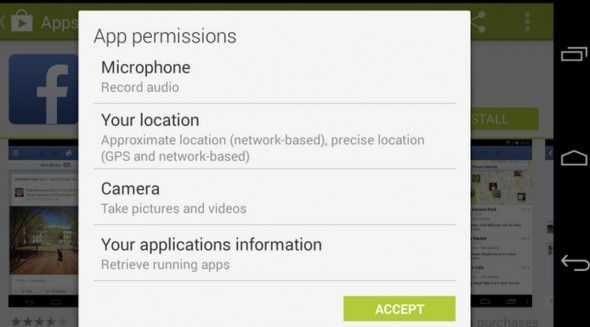
With regard to licenses of apps there are many ways to make sure this doesn't happen on your phone or tablet. The user what he has to do, is to make sure when installing an application from the Play Store, which royalties are requested. If the app has nothing to do with the camera, it shouldn't ask for permission to uses the camera.
Android also has one process file of the system that allows users to know what apps run in the background and who are asking permission to work.
Source: e-pcmag.gr