



To determine which antivirus product provides the best security on the market, the Security Testing Institute AV-TEST conducted a survey in March and April to test the most popular ones applications released for Windows 10 and the results were a bit strange.
Its antivirus programs Kaspersky, Bitdefender and Symantec which have been at the top of the list for a while, probably started to lose ground.
This time only two software managed to score the highest score and get 6 out of 6 points in protection, performance and usability tests for a final score of 18 points: Kaspersky and Avira.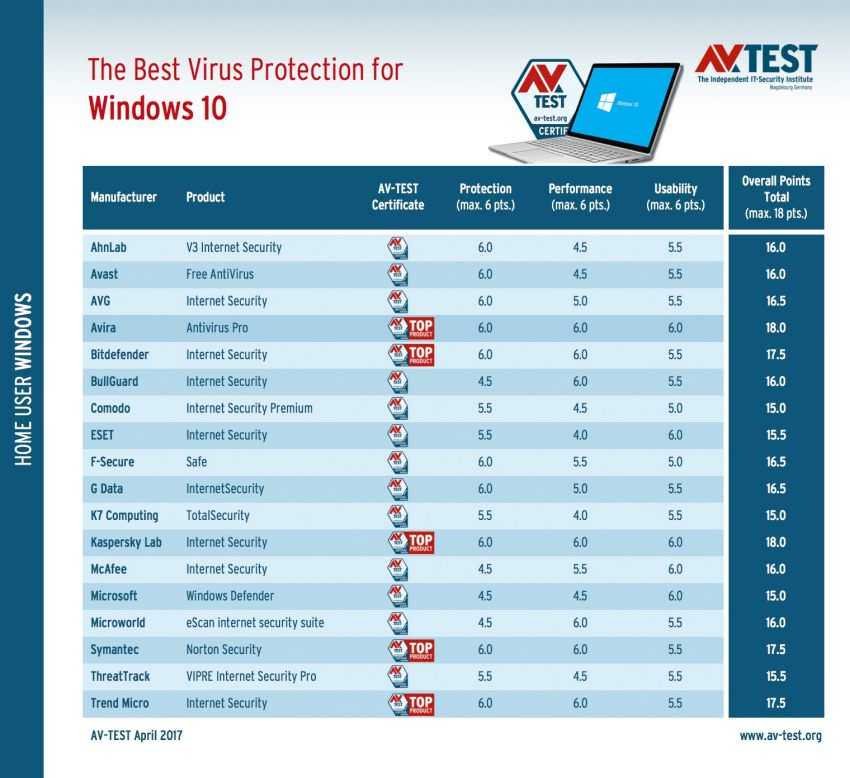 According to the institute AV-TEST Microsoft, Symantec and Bitdefender applications come in second on the charts and are very close to the top with 17,5 points due to the 5,5 points in usability tests. They all got 6 points for protection and performance.
Especially disappointed was ESET, whose security products only received 5,5 units for protection, 4 performance grades and 6 units for usability. This means that the company's software not only failed to detect all malware samples but also slowed down the Windows 10 system much more than the applications mentioned above.
Avast's security product has received 6 degrees to protect, but only 4,5 in performance and 5,5 grades for usability.
As for Windows Defender Microsoft, seems to be one of the worst security solutions after scoring 15 points as a final score. He scored 4,5 points in protection and performance tests, and 6 points in usability.
The latest security solution on our list by AV-TEST is the Comodo software, which received 5,5, 4,5 and 5 units, respectively.