

A new report from Check Point 's External Risk Management research team sheds light on the dramatic rise of ideologically motivated hacktivism by a Kurdish nationalist hacker group known as Hezi Rash.
-
Between August and October 2025 , the group carried out approximately 350 Distributed Denial-of-Service (DDoS) attacks — an unprecedented number for groups of this size.
-
The targets ranged from Japan, Turkey, Israel, Iran, Iraq and Germany , with Japan recording 66 attacks , mostly in response to symbolic or cultural challenges , rather than for political or economic reasons.
-
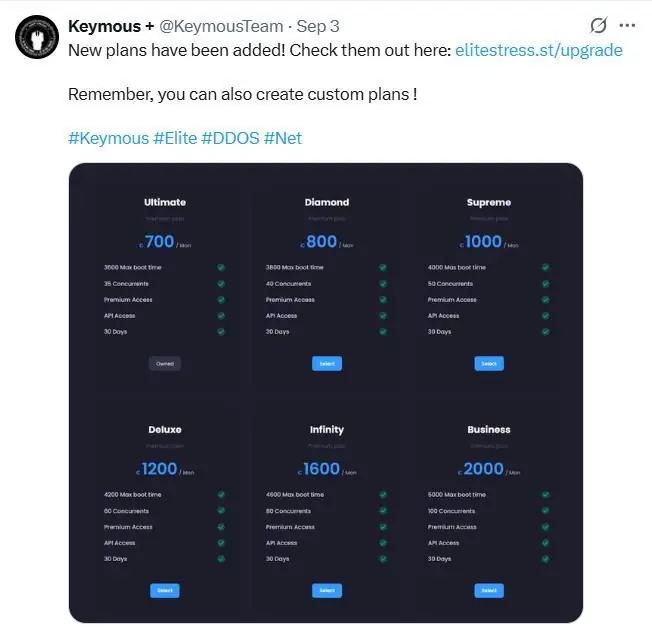
The group's alliances with Killnet , Keymous +, and NoName057 (16) indicate an interconnected network of hacktivists , combining ideology with professional-level offensive capabilities.
The rise of ideological DDoS warfare
New Check Point research reveals how the hacktivism evolved from simple symbolic alterations of web pages to coordinated, massive cyber campaigns with the potential to disrupt critical services and shape public perception.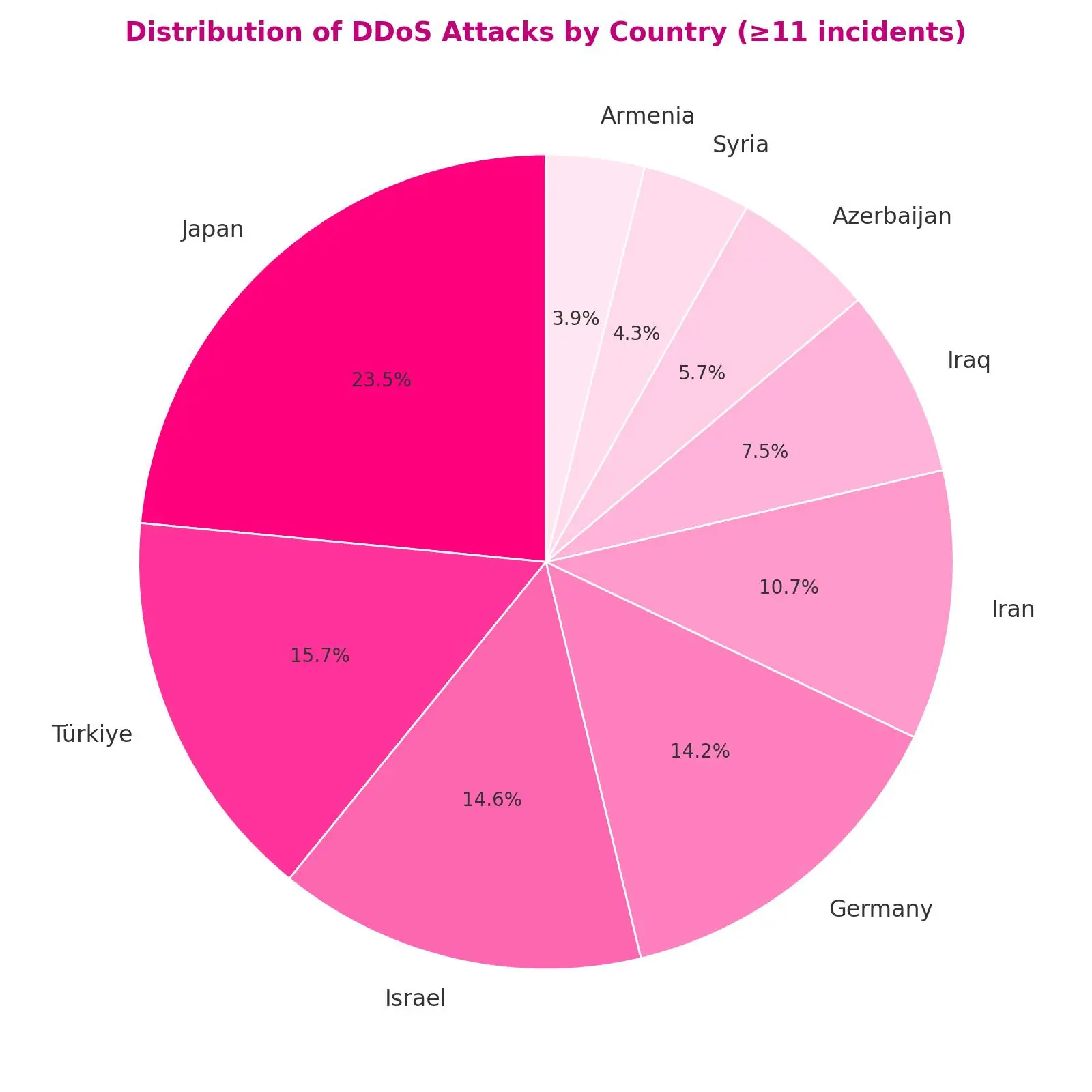
The Hezi Rash group — also known as “ Black Force” — has emerged as one of the most active emerging players, using DDoS attacks as a weapon to bolster nationalist and religious movements . Their attacks are often linked to real events; for example, after a Japanese anime depicted a burning Kurdish flag , the group launched dozens of cyberattacks on anime-related platforms and studios.
In the period August–October 2025 alone , Check Point's External Risk Management team recorded 350 unique DDoS incidents attributed to Hezi Rash — compared to the 50–100 attacks typically carried out by other similar collectives — suggesting a strategic effort for global recognition.
While most businesses experienced temporary outages, the findings highlight a troubling trend: small ideological groups now possess industrial-scale disruption tools that were previously only used by state-sponsored or financially motivated actors. Through alliances with pro-Russian and Islamist hacker groups , Hezi Rash is reportedly leveraging DDoS-as-a-Service (DaaS) platforms like EliteStress and tools like DDoSia and Abyssal DDoS v3 , which give it multiplied reach and firepower.
The implications: What this means for businesses and states
The Hezi Rash phenomenon reflects a broader shift in the global cyberthreat landscape , where hacktivist groups can now:
-
They scale attacks autonomously through AI-driven DDoS-as-a-Service platforms.
-
They mobilize international supporters within minutes through encrypted channels like Telegram and X.
-
They target national symbols and narratives , turning digital anger into mass online disorder.
For governments and critical infrastructure operators, these developments are a clear indication that cyberwarfare is now transcending borders and economic motives . As the group’s alliances expand across Europe, the Middle East and Asia , increasing risks are also expected for Australia and the wider Asia-Pacific region , where ideologically related actors operate exploiting the same open DDoS ecosystems.
Check Point researchers warn that hacktivism is no longer amateur or symbolic — ideology , automation , and accessible cyber tools are combining, creating a new wave of AI-assisted , data-driven, and influence-oriented activism , blurring the lines between activism and cyberwarfare , transcending borders, languages, and motives.
Statement by Daniel Sadeh, Cyber Threat Intelligence Specialist, Check Point External Risk Management (formerly CyberInt):
"The Hezi Rash team represents the next phase of hacktivism speed, ideological passion and reinforcement through automationWhat we observe is the weaponization of attention: symbolic events are immediately transformed into coordinated global cyberattacks.
To protect themselves, organizations must adopt a proactive security strategy, based on real-time threat information and automated artificial intelligence solutions.
The future of cybersecurity will belong to those who can detect, decide and defend at machine speed — before disruption becomes the new normal.”


0 reviews
iGuRu.gr