Cyberattacks in education at historic highs

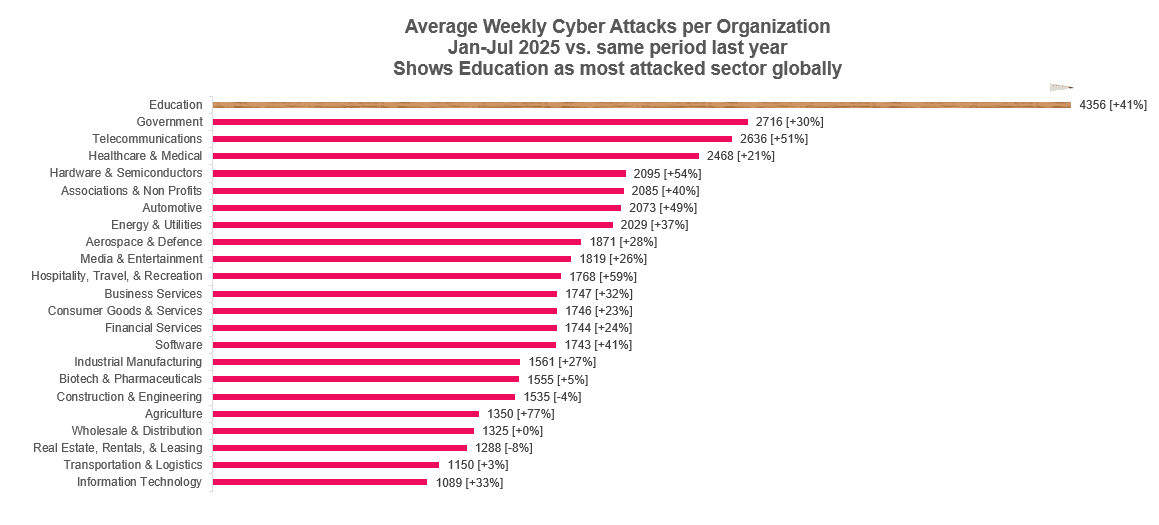
As millions of students return to classrooms and campuses, educational institutions are facing yet another challenge: the dramatic rise in cyberattacks. According to Check Point Research, from January to July 2025, the Education sector maintained its position as the most targeted sector globally, receiving an average of 4.356 attacks per organization per week — a 41% increase year-over-year.
See more articles from iGuRu.gr when you search for news on Google.

Global Picture of Attacks on Education
The Education sector is recording unprecedented levels of cyber activity this year:

  • 4.356 attacks on average per week per organization, globally.
  • 41% annual increase, making Education the most targeted sector internationally.
  • Consistent targeting of both developed and emerging markets, which highlights the global scope of the threat.

These figures confirm that the education sector is now at the center of cybercriminals' attention, with attacks intensifying during critical periods of time, such as the return to the school and academic year.

Regional and Country Focuses of Attack

  • Η Asia Pacific (APAC) records the highest volume of attacks, with organizations in the region being hit on average by 7.869 weekly attacks.
  • Η North America recorded the largest increase, with a rise 67% on an annual basis.
  • At Europe attacks increased by 48 %, while in Africa the rise reached 56 %.


Region

Average Weekly Attacks per Organization

Change YoY

APAC

7,869

+ 31 %

Africa

4,473

+ 56 %

Europe

4,161

+ 48 %

Latin America

3,164

+ 16 %

North America

3,047

+ 67 %


At the country level, the largest increases were recorded in:

  • Hong Kong – 5.399 attacks, + 210 % on an annual basis
  • Italy – 8.593 attacks per organization, + 82 % on an annual basis
  • Portugal – 5.488 attacks, + 80 % on an annual basis
  • United States – 2.912 attacks, + 75 % on an annual basis

These figures highlight that schools, universities and colleges around the world are increasingly being targeted by cybercriminals.

Seasonal Phishing Threats Targeting Students and Staff
Cybercriminals are taking advantage of seasonal spikes in digital activity. In July 2025 alone, Check Point detected 
18.391 new domains related to schools, universities and students, with one in 57 be characterized as malicious or suspicious.

Several phishing campaigns show how attackers dress up threats with academic content:

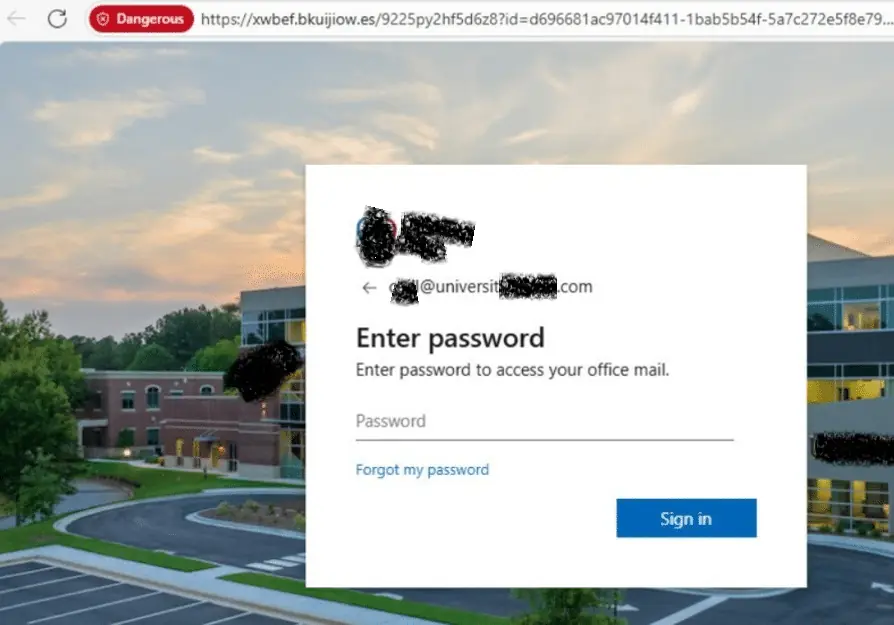
  • Fake university login pages: On August 12, the perpetrators distributed phishing emails with files containing names of schools and universities in the format [university_name].comVWAV.svg. Victims were redirected to fake login pages designed to mimic Microsoft Outlook, with the aim of stealing credentials.
  • "Payment Update" Scam: In August, University staff members in the United States received a PDF titled “***** University-Pay Update.pdf.”* The document urged recipients to update their multi-factor authentication (MFA) settings via a QR code, threatening account suspension. In reality, the file redirected to a fake Microsoft login page designed to steal credentials.

Why Education is a Main Goal
The education sector combines a “perfect storm” of vulnerabilities:

  • Particularly dispersed user bases (students, staff, alumni, parents).
  • Heavy reliance on online platforms and password sharing.
  • Limited budgets for IT and cybersecurity.
  • Access to sensitive data, from student records to cutting-edge scientific research.

These conditions make schools an attractive target for cybercriminals seeking financial gain or identity theft.

How can schools be protected?
To reduce risks during the return to school period, educational institutions should:

  • Raise awareness of phishing among staff and students by presenting examples of current attacks.
  • Harden authentication by implementing MFA and monitoring for attacks that exploit “MFA fatigue.”
  • They check new domains related to their institution for typosquatting or impersonation.
  • They update and patch systems regularly, especially widely used platforms like email and collaboration tools.
  • They implement advanced threat prevention solutions that block malicious emails, files, and links before they reach users.

Data Source
The analysis information is based on 
ThreatCloud AI Check Point, which processes millions of indicators of compromise (IoCs) every day. With more than 50 AI-driven engines and data from 150.000+ networks and millions of endpoints, ThreatCloud AI offers one of the most comprehensive, real-time views of the global threat landscape.

Main Conclusion
With attacks on the Education sector increasing by over 
40% on an annual basis and phishing campaigns to exploit the "fever" of the new school year, the sector remains at the forefront of global cyber threats. The preventive safety training and multi-layered defenses are essential elements for the protection of students, staff and institutions.


Google preferences

Leave a Comment

Your email address will not be published. Required fields are marked *

Your message will not be published if:
1. Contains insulting, defamatory, racist, offensive or inappropriate comments.
2. Causes harm to minors.
3. It interferes with the privacy and individual and social rights of other users.
4. Advertises products or services or websites.
5. Contains personal information (address, phone, etc.).