Microsoft finally puts WSL Containers in public preview

Microsoft he said that WSL containers, a feature that allows developers to run Linux containers natively within Windows without the need for Docker Desktop, are now available in public preview several weeks after Microsoft showcased them at Build 2026.wslc cli
To use the new container feature, you will first need to install the latest pre-release of Windows Subsystem for Linux with the quick update command in your terminal:

See more articles from iGuRu.gr when you search for news on Google.

wsl --update --pre-release

After installation, you will have access to the new Linux container CLI (wslc.exe) and the programmable API.

Microsoft said the CLI has a “familiar format” that fits with the toolsets developers already use every day. If you’re familiar with the standard Docker commands, you’ll have no trouble with wslc.exe, which even has a built-in alias container.exe.

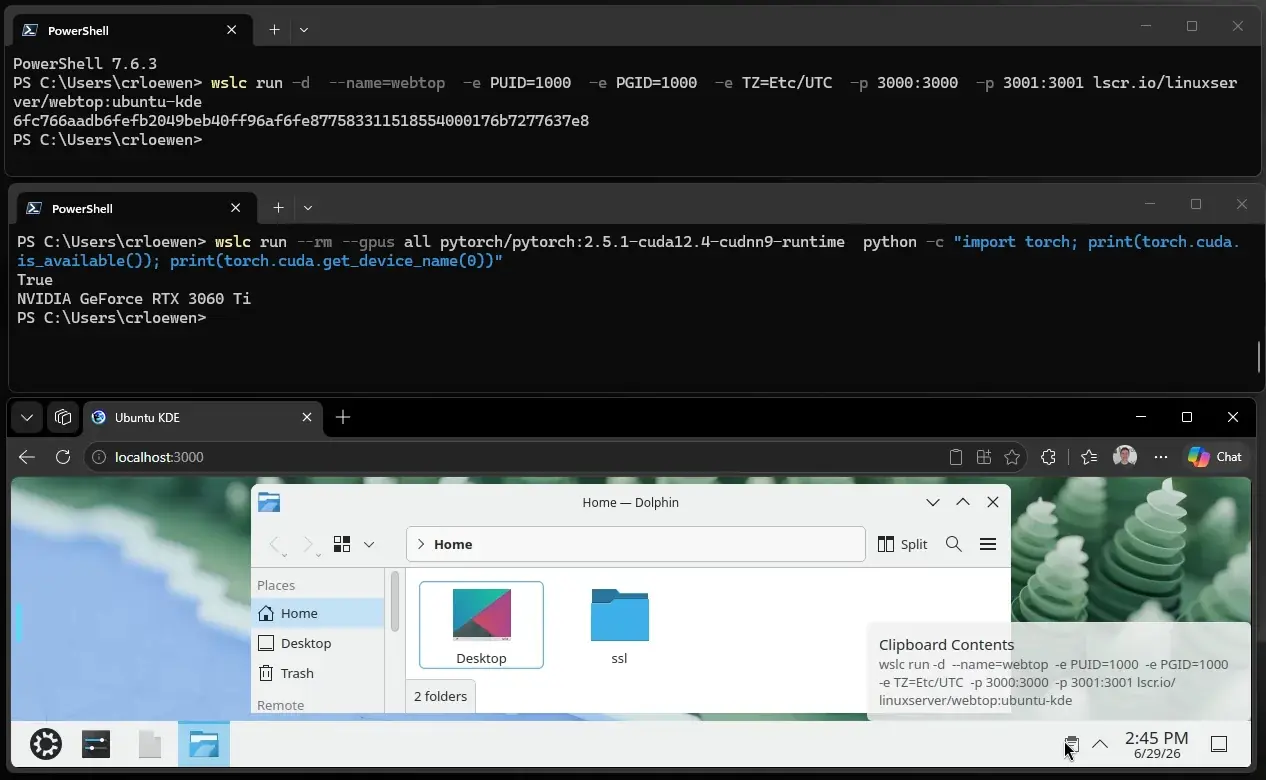
You can quickly run a full Ubuntu KDE desktop container with the ports you want, or pass your graphics card directly into a machine learning environment to run PyTorch workloads. Using the –gpus all flag in a run command will instantly connect your hardware.

As for the API, developers can now integrate Linux container functionality directly into native Windows applications without exposing the command line to users. The team integrated the API directly into MSBuild and CMake, so developers can define container steps directly in project files.

In addition to releasing the CLI and API in public preview, Microsoft also said it is preparing a new default file system called virtiofs to speed up file transfer rates between Windows and Linux. Microsoft also added an experimental networking feature called consomme, which resolves compatibility issues with corporate VPNs by routing Linux network traffic directly through Windows.


Google preferences

Leave a Comment

Your email address will not be published. Required fields are marked *

Your message will not be published if:
1. Contains insulting, defamatory, racist, offensive or inappropriate comments.
2. Causes harm to minors.
3. It interferes with the privacy and individual and social rights of other users.
4. Advertises products or services or websites.
5. Contains personal information (address, phone, etc.).