Microsoft: get ready for Windows 11 26H2

Windows 11 typically follows a yearly update cycle, but Microsoft recently broke with that tradition a bit by releasing a “26H1” build in the first half of this year as a release only for select new PCs. This build was not available to customers running builds 24H2 and 25H2, as Microsoft is reportedly preparing 26H2 for everyone, which has been officially confirmed for the first time.
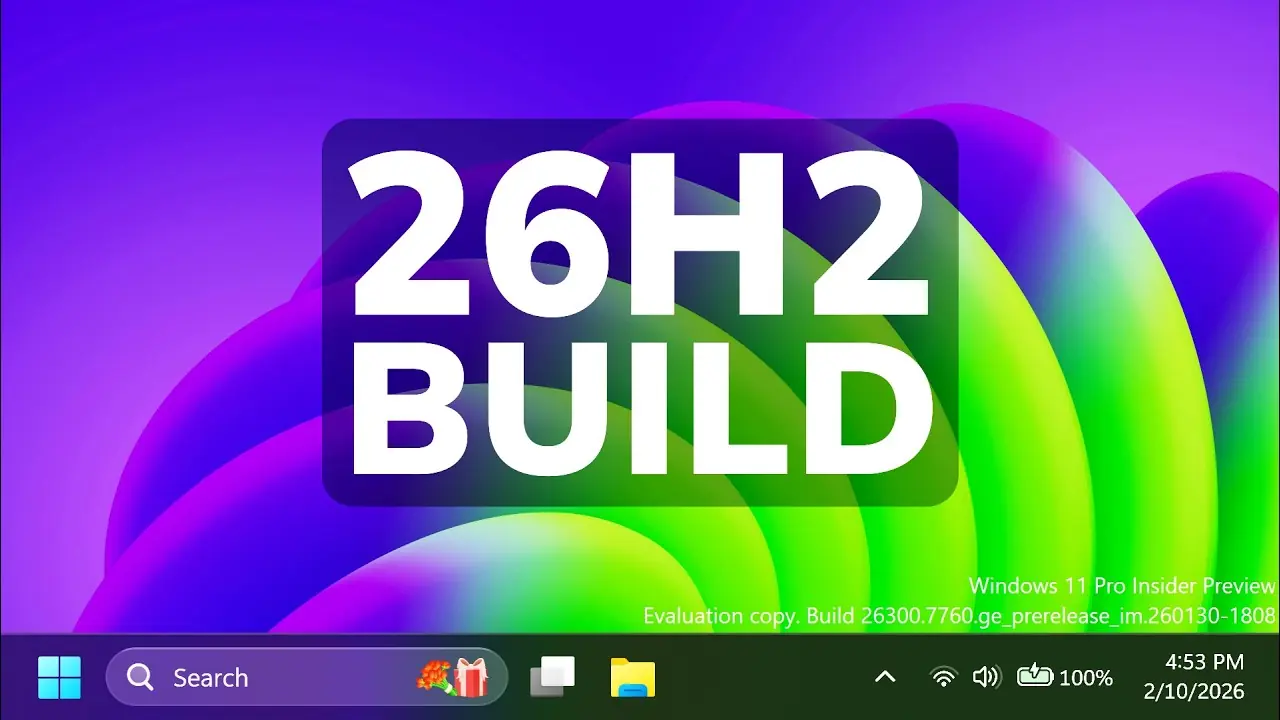
In a post on the Windows IT Pro Blog, Microsoft is urging IT administrators to prepare for the upcoming release of Windows 11 version 26H2. The company confirmed that this will be a small enablement package (eKB) that will simply enable some disabled features that are already in the operating system codebase. This means that the “improved” Windows update and deployment experience will be simpler and faster, with minimal disruption, as the feature update will simply enable a few flags instead of a complete replacement.


See more articles from iGuRu.gr when you search for news on Google.

Microsoft said that all of this is possible because the standard versions of Windows 11 share the same servicing branch and source code. However, this also means that users who already have the early Windows 11 26H1 build will not be able to upgrade to 26H2, as it is a different servicing branch.

As with previous annual feature updates, Windows 11 26H2 will have the following support cycles:

24 months of support for Home, Pro, Pro EDU and Pro for Workstations editions
36 months of support for Enterprise, Education, IoT Enterprise and Enterprise Multi-session editions

Microsoft hasn't confirmed a specific release date for Windows 11 26H2, but it says it's "coming soon." Based on the current release rate, we can expect it to start rolling out in early October 2026.


Google preferences

Leave a Comment

Your email address will not be published. Required fields are marked *

Your message will not be published if:
1. Contains insulting, defamatory, racist, offensive or inappropriate comments.
2. Causes harm to minors.
3. It interferes with the privacy and individual and social rights of other users.
4. Advertises products or services or websites.
5. Contains personal information (address, phone, etc.).