



Microsoft surprised everyone today when it announced at Build 2017 that Apple is bringing iTunes to the Windows Store. It was a surprise but not like the one that followed immediately after…
Ubuntu will also be available through the Windows Store, while the Fedora και το Suse έρχονται στο Windows Subsystem for Linux.

Basically, releasing Linux distributions through the Windows Store will allow users to install them as applications on Windows 10 devices, meaning they'll be able to run Windows and Linux apps together without having to have two dual-boot systems.
"Windows 10 is the first system to allow you to do this," Microsoft told Build at a developer conference today.
This functionality will be available with the Windows 10 Fall update Creators Update, but the Ubuntu is already available in the Windows Store while it is Suse and Fedora will be released later. The update for WSL (Windows Subsystem for Linux) will also be released later.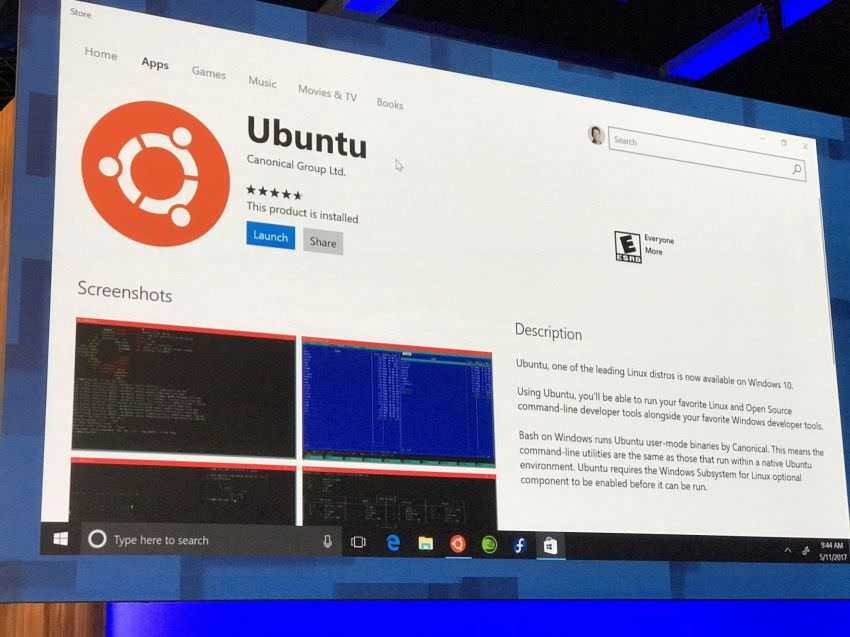
Microsoft once again reiterated that it loves Linux, leaving behind all the criticisms that the former CEO has said about the world of open source. Steve Ballmer, the former chief executive of Microsoft, once called Linux cancer, but with today's announcement, it is now obvious that the Redmond company is now openly supporting Linux and open source (?!).
"Windows 10 will be the most productive user interface ever," Microsoft said.
As you can see in the screenshot, the Ubuntu Windows Store listing is similar to any other app available in the Store and of course it is available to download and install free.
As new Linux distributions are released through the Windows Store, they will run on Windows 10 S, the version of Microsoft's Windows 10 that only runs applications from the Store.