Noname057(16) behind DDoS at NATO summit

As the international community prepares for the NATO summit in The Hague, the first signs of digital unrest are beginning to emerge.

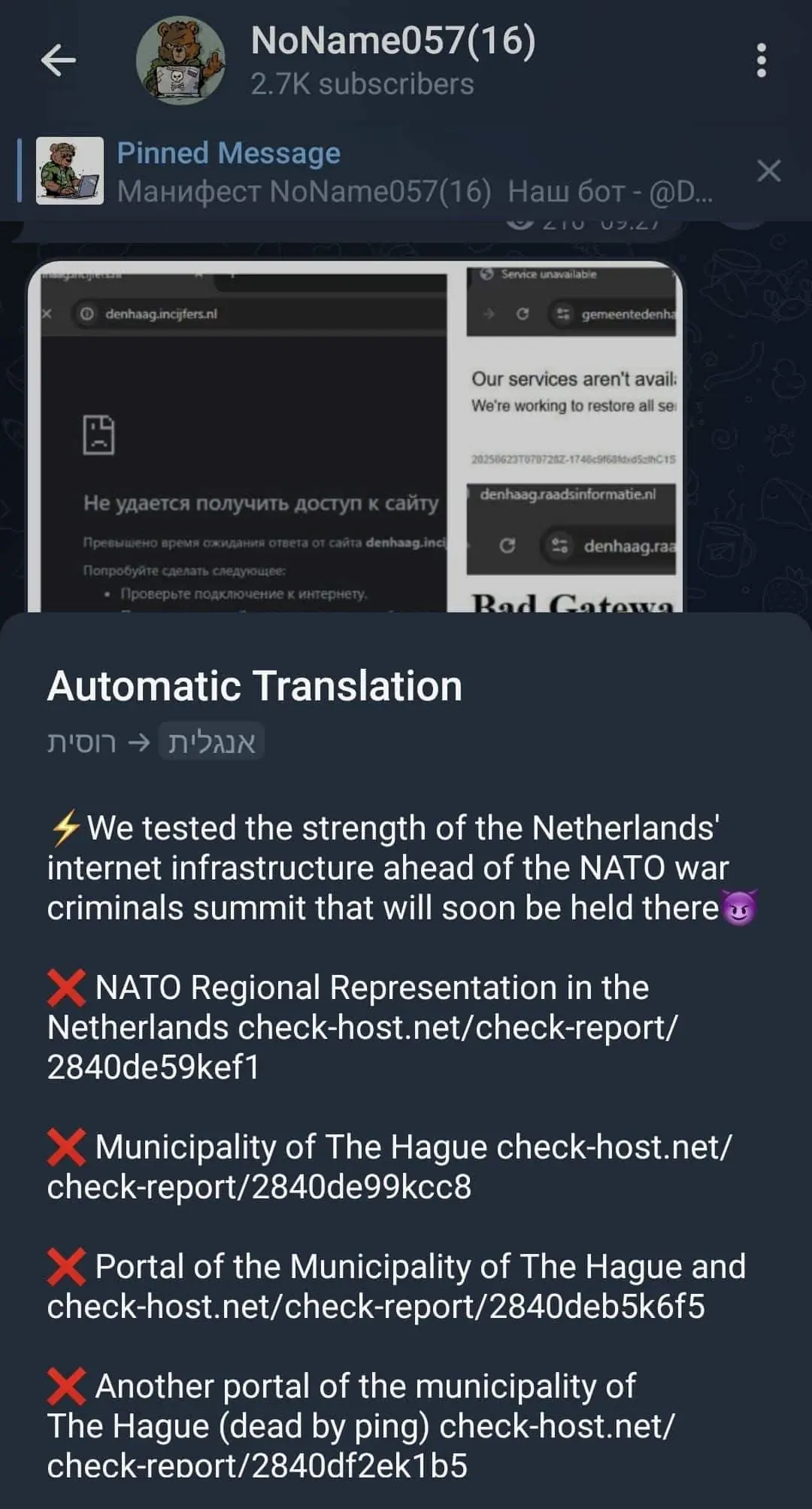
Check Point Research researchers have identified early signs of cyber activity, with signature DDoS attacks that appear to be linked to the pro-Russian group Noname057(16). These developments confirm how cyberattacks are closely linked to critical geopolitical events.

See more articles from iGuRu.gr when you search for news on Google.

What We Know So Far

  • Stated Goals: According to posts on pro-Russian dark web forums, the Noname057(16) group claims to have targeted the NATO office in the Netherlands, as well as selected digital portals of the municipality of The Hague.
  • Attack Type: These are volumetric DDoS attacks that seek to temporarily interrupt or degrade services by overloading endpoints.
  • Motivation: Noname057(16) has a history of targeted, low-intensity attacks aimed at disruption, mainly at politically charged moments related to European geopolitics.

Check Point's Viewpoint

While the immediate impact of these attacks remains limited, Check Point highlights that DDoS campaigns may act as harbingers of broader malicious activity. In times of heightened political sensitivity, cyberattacks are not necessarily aimed at direct infiltration, but rather at causing symbolic and operational disruption — reinforcing the cybercriminals’ message.

Organizations associated with international diplomatic or defense processes are urged to remain on high alert, enhance their security protocols, and actively monitor for signs of unusual activity.

Check Point continues to monitor the situation in real time through its ThreatCloud AI network and is committed to providing ongoing updates and support.


Google preferences

Leave a Comment

Your email address will not be published. Required fields are marked *

Your message will not be published if:
1. Contains insulting, defamatory, racist, offensive or inappropriate comments.
2. Causes harm to minors.
3. It interferes with the privacy and individual and social rights of other users.
4. Advertises products or services or websites.
5. Contains personal information (address, phone, etc.).