In this article you will see a guide for beginners on cryptocurrency mining or mining. Here's what you need to do to start earning your first money as a miner.

See more articles from iGuRu.gr when you search for news on Google.


In this article you will see a guide for beginners on cryptocurrency mining or mining. Here's what you need to do to start earning your first money as a miner.
Cryptocurrencies saw a huge surge in their value against the dollar from last December to April. Popular coins, and Bitcoin in particular, reached incredible levels of performance, breaking records one after another. This led to an increase in mining as people tried to take advantage of the boom and make money from the process required to operate them.
However, if you are someone who does not understand what mining is, what is cryptocurrency etc, then you are in the right place. We have created a guide to help you understand what mining is and what you need to do to make money.
Before we get into mining, let's first understand the concept of cryptocurrency. A cryptocurrency is a digital asset that acts as a medium of exchange, just like the euro, where a user transfers ownership of a currency in exchange for goods or services.
Satoshi Nakamoto was the first person to create the decentralized currency Bitcoin, to solve the gaps that existed in traditional or fiat money.
No one knows who Satoshi Nakamoto is, but as he explains in his written statements, the currency was designed to be decentralized from state power, which means that no central authority has an ownership relationship with it, resulting in it being completely transparent as all transactions are stored in a public "ledger" called Blockchain (block chain) and at the same time anonymous.
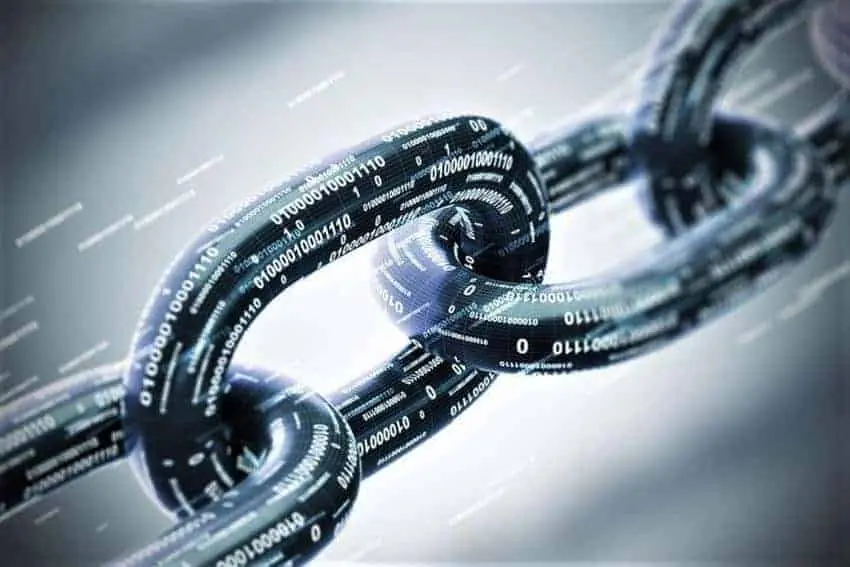
Read more: How Blockchain Technology Works. A Beginner's Guide.
After the launch of Bitcoin, several developers began working on its basic principle, and the world soon saw other cryptocurrencies with small or large variations in their functionality. Most of them are designed to solve real-world problems, as well as for future use. As of early 2021, there are over 4.000 cryptocurrencies!
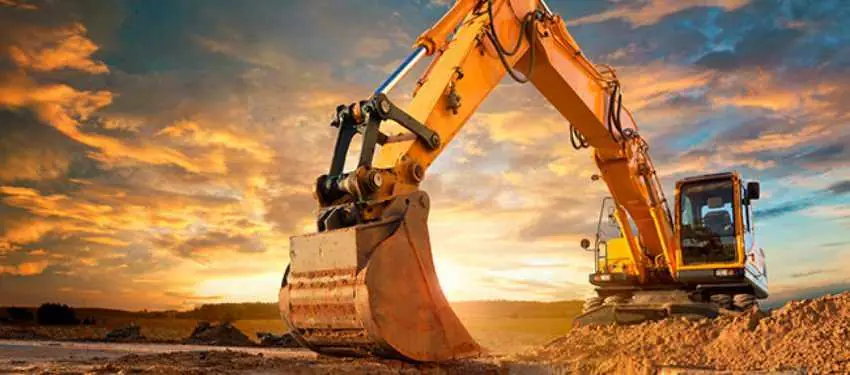
Now that the concept of encryption is clear, let's move on to mining and what role it plays. In simple terms, mining is the validation of encryption transactions.
Mining is the process of creating computer hardware to perform mathematical calculations for a cryptocurrency network to confirm transactions and increase security. As a reward for their services, miners collect transaction fees for the transactions they confirm. These fees are not retained by any user but constitute new, newly created cryptocurrencies.
This is why it is called mining since with the process of confirming the transactions, new cryptocurrencies are created (mined) as a reward. Mining is a specialized job where the fees are divided according to how much has been calculated by each machine.
How much will you earn? The benefits of bitcoin mining are halved every four years. When bitcoin first appeared in 2009, mining a block would yield 50 BTC. In 2012, it was halved to 25 BTC. By 2016, this was halved to 12,5 BTC. On May 11, 2020, the reward was again halved to 6,25 BTC. Today, in May 2021, the price of Bitcoin is around 30.800 euros per Bitcoin, which means that you will earn 192.500 euros (6.25 x 30.800) for completing a block.
But let's look at it in a little more detail. Since cryptocurrencies are not controlled by a state authority (they are decentralized), there is no central authority, such as a bank, to verify transactions. Here comes the extraction. Pay some attention to why strange accounting and cryptographic terms are involved:
Most of the early cryptocurrencies used a concept in cryptography called “ proof-of- work ” (POW), which is a cryptographic “ zero-knowledge proof” where one party (the prover) proves to the other party (the verifier) that some transaction work has been done.
Bitcoin is based on this logic and specifically relies on a distributed public ledger called Blockchain that records every transaction that occurs on the network. The blockchain organizes all transactions into sequences to prevent double spending by users.
Parentheses: If a malicious user tries to spend their bitcoins to two different recipients at the same time, this is a double spend . Bitcoin mining and the blockchain are there to create a general consensus on the network, as to which of the two transactions will be confirmed and considered valid.
In addition, the blockchain is distributed to all miners to avoid fraudulent assignments, as a modified version of a block can be verified or rejected by other miners, so the system is transparent and at the same time almost inviolable since 51% those who hold the blockchain will have to agree on each transaction.
In fact, each block (block = part of the blockchain that contains and validates many transactions - about every 10 minutes, on average, a new block is created) is assigned a hash, which is a large number of alphanumeric characters, for verification. of the transaction. Miners who help verify blockchain transactions are paid for their efforts and contributions to the network.
While this system works well for Bitcoin and other currencies, it also creates huge demand for computer hardware needed to verify transactions. In addition, it also generates a lot of heat and requires constant power to operate.
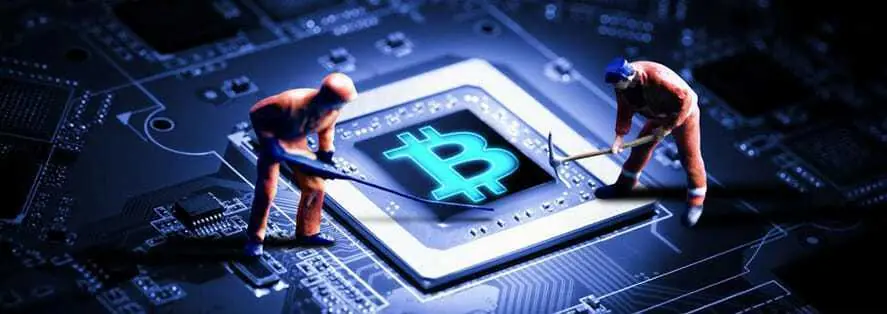
You will need a helmet, a pickaxe, a shovel κάνουμε we make fun. Now that you understand what cryptocurrency mining is, we will talk about how to mine it.
Warning before we proceed . Mining puts a constant load on your GPU (or CPU) and increases power consumption. Both are bad in the long run, as they can significantly increase your electricity bill as well as cause irreparable damage to your components. If you decide to mine, do so at your own risk. I or anyone else at iGuRu will not be held responsible for any damage that may occur while mining or due to incorrect GPU configuration.
Now that we have that out of the way, let's talk about what you need to mine. First of all, you need a good computer (or more).
The computing power you need to mine can be your CPU or your GPU. GPUs are preferred as they are more efficient for this job. Although there is no minimum requirement for mining, we recommend getting a relatively new GPU.
We recommend that you get a GPU 30 series if you can, otherwise go for a state-of-the-art GPU RTX. The same goes for AMD GPUs. The newer the GPU, the better hashrate you will have and the more money you can earn. The hashrate refers to the total computing power used to extract cryptocurrencies. The higher the hashrate, the more you can earn through mining.
If you find the latest generation GPUs expensive (which they really are), you might want to consider buying a used one. Be careful what you buy as used GPUs may have a very good price, but there is a high risk that you will end up with a GPU that was previously used for bitcoin mining and thus be quite stressed.
Now, let's talk about the software you will need to mine cryptocurrencies. There are many software available. Our suggestions below are indicative. You can search and try many more.
Before that, though, we highly recommend downloading MSI Afterburner , as you will need to tweak your GPU settings for optimal use. This program will also allow you to reduce the power it uses and extend the lifespan of your GPU. It works on any graphics card, even non-MSI.

Unfortunately, we can not tell you which settings to use in MSI Afterburner, as there are many GPUs on the market and control of each GPU is not the same for all. You can connect to the internet and check the settings used by other miners and play them or adjust them manually.
Note that you should ideally reduce the power limit by 100% while increasing the memory clock. At the same time, you can also reduce the GPU core and set your GPU fans to maximum to cool it down. Your goal should be to increase the hashrate while keeping the temperatures under control and using as little power as possible. Again, the exact settings can be found on Reddit and will vary depending on the GPU model.
Mining software required:
1. Digital Wallet
2. Mining software
Digital wallet
Now that you have set up your GPU, let's talk about it Digital Wallet. Every mining software requires a wallet address, which is something like a bank account number for receiving coins. To obtain a wallet address, you must create an account with an exchange. Popular cryptocurrency exchanges are Binance, Huobi Global, Coinbase Exchange, Kraken, KuCoin, Bitfinex and Gate.io.
You should check if the exchange you choose is allowed to operate in your country. Binance, for example, was banned by the US, so people living in the US will have to open an account at one of the other exchanges. In addition, you must make sure that the exchange you choose allows credit from mining. For each one you can contact their customer support if you want more information.
Once you have opened an account, go to the wallet section and find the deposit address for the currency you want to purchase. Make sure you choose the right grid, otherwise your coins will be lost. Again, you can contact exchange support if you want help choosing the right network.

Extraction software
Next is the mining software. There is a lot of software that you just install, tell them what your wallet is and let them "run" in the background. You do nothing. What you will see is the money you earn going into your account. These softwares talk to the network of each cryptocurrency and when required start calculating transaction confirmation.
Here you can see a list of the best of them. As an alternative to these softwares, you can use a mining operating system (Mining OS) and create a computer dedicated only to mining.
For Bitcoin mining, we will recommend Nicehash . It is a reliable software that has been available for quite some time and allows users to mine from their main system. Installing the software is simple. Simply go to the Nicehash website and download the software. After downloading, follow the steps to install and set up your Nicehash account.
Nicehash also provides QuickMiner, which is CUI-based software. However, for beginners, we would recommend using the GUI miner, as it is easier to configure your preferences.
Moving on, if you are interested in mining other coins then you can use a tool called Unmineable . Unmineable allows users to mine cryptocurrencies that are not readily available. It includes coins like ADA, Doge, BTT, Ethereum, Uniswap, Dash, etc. Unmineable also provides users with an easy-to-use GUI software that you can use to set everything up. You can download the software from their website and configure it for the cryptocurrency you want to mine. Once you are done, click start to start mining your desired cryptocurrency. Unmineable will automatically transfer coins once you cross a certain threshold, but you can disable it if you want to manually transfer the coins to your wallet. For experienced miners, Unmineable also supports PhoenixMiner, lolMiner, NBMiner, and T-Rex, so you can use them if you prefer a command line experience.
Cryptocurrency mining can yield a decent extra income, ONLY if you can get a decent GPU and spend time configuring it.
Although Bitcoin recently suffered a huge drop, after Musk's announcement , reducing transactions, many may stop mining, which could reduce the mining difficulty, allowing you to make more money.
However, mining comes with its own set of risks and you should always keep these in mind when mining. Never attempt to push the GPU to the edges, as this may cause serious damage to the GPU and other components.
In general, do not expect to get rich by mining. The money you will spend on the primary purchase of the machines, the money you will spend monthly on energy, as well as the impairment of the value of your machine (excluding any damages) will not be much different from the profits. In fact, if you do not give enough, you will not earn enough, so with a single mid-range machine and a small internet connection, you better forget about it.
As for the future, mining may cease to exist as developers move towards a proof-of-stake (POS) concept that does not require mining to validate blocks. Instead, cryptocurrency holders can stake their coins to verify transactions and receive a reward.
Ethereum is the first major cryptocurrency to take a step in the right direction. However, the future where all cryptocurrencies use the concept of Proof of Stake is far away.



Dimitris hates Mondays...