



At the end of August, there were a lot of problems on stage (The Scene) as raids were carried out by law enforcement authorities throughout Europe.
But as you can see, the scene is back in full force. Yesterday the release group CPY released four games protected by the Denuvo. 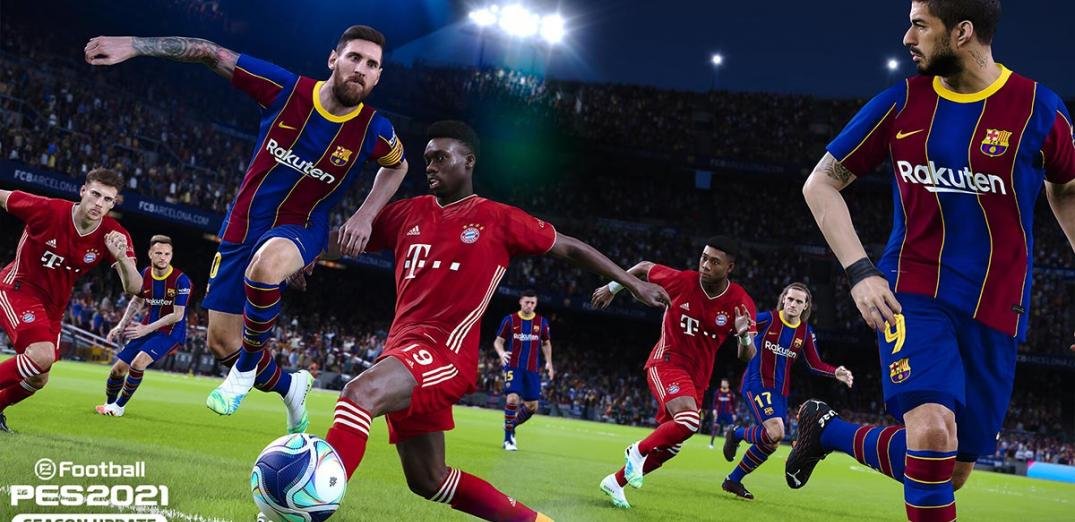
At the end of August team members SPARKS, GECKOS, DRONES, ROVERS and SPRINTER, were arrested by the authorities and since then a very large one has been observed drop on pirated releases.
Since then there have been minor releases and repackages of older titles and nothing to suggest that the scene will recover. This was changed yesterday by an old release group, CPY, who released 4 games protected with software by Denuvo.
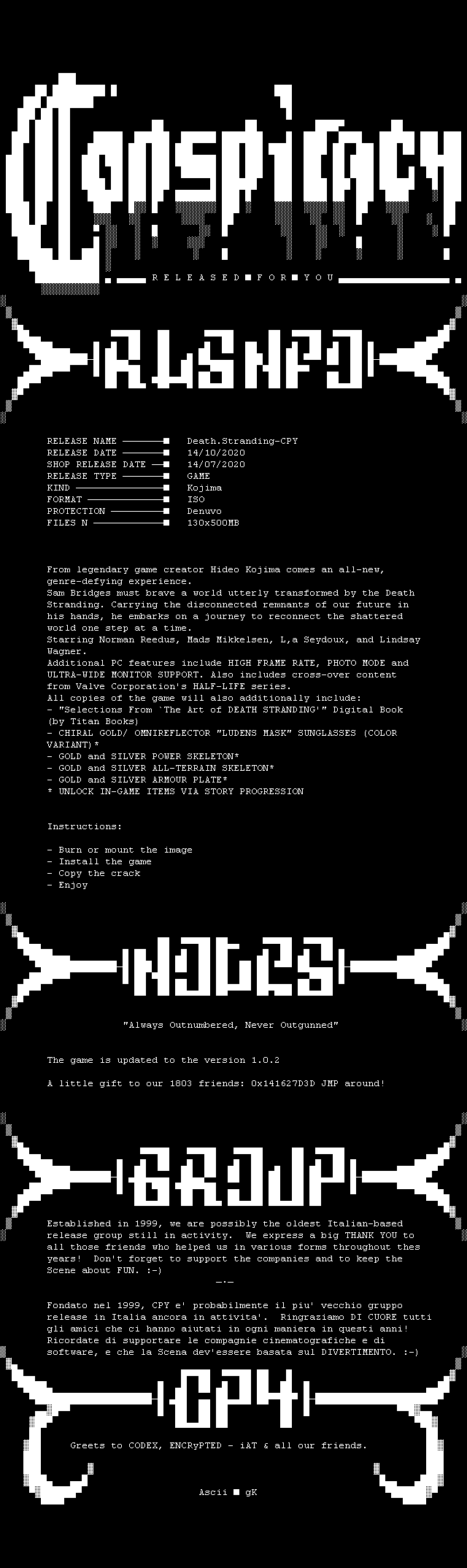
The CPY group (Conspiracy) was founded in 1999, and is one of the most well-known cracking groups. So yesterday within a few hours, the team released four new titles one after the other, and all of them were protected by Denuvo's effective anti-tamper technology.
First and major release was the action game 'Death Stranding'
The next release was the Mafia: Definitive Edition action-adventure game. It is the 2020 version of the 2002 Mafia game and was again protected by Denuvo.
The third release is also popular as it is the eFootball PES 2021 game.
Finally, the game A Total War Saga: Troy was released.
Breaking Denuvo security software is one of the most difficult "achievements" right now.
Of course the strange thing is that they use this kind of protection for games that cost less than 50 euros, when an Adobe program can break changing just one byte in one of the app's dll's…