

Imagine pressing a button and erasing all your data. That's essentially what TEAMGROUP has made possible with the new SSD P250Q.
The storage device includes a “self-destruct” function that uses hardware and can permanently erase sensitive data in seconds, even after a power outage.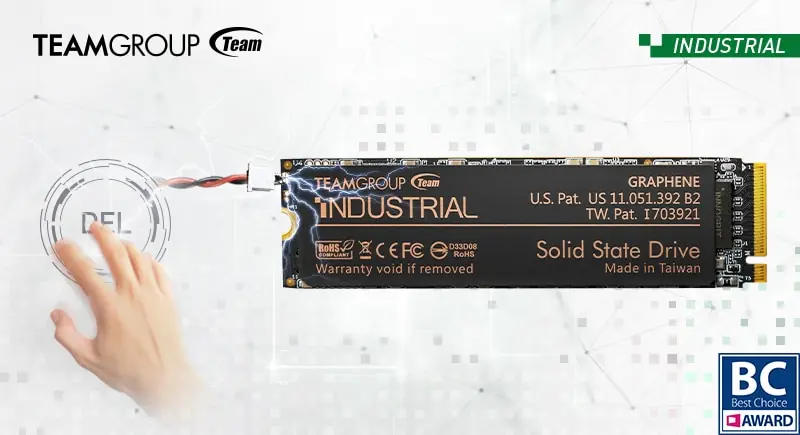
Officially named the TEAMGROUP INDUSTRIAL P250Q Self-Destruct SSD , this is not some science fiction prototype. It is a real product aimed at industries where security is a matter of life and death.
For example, think about the military, AI development, and smart factories. The drive might include an independent destruction circuit that directly targets the flash memory itself. This means there is no recovery, no forensic recovery, and certainly no leaks.
TEAMGROUP doesn't stop at hardware destruction. The P250Q also uses a software system with an auto-resume function. If the power supply is interrupted during the erasure process, it continues exactly where it left off when the power supply is restored.
Add one-click power-on, a physical LED progress indicator, and NVMe 1.4 compliance with blazing-fast PCIe Gen4x4 performance, and you have something rare: a storage device that's both fast and ruthless.
This SSD isn't just fast on paper. With read speeds of up to 7.000MB/s and write speeds of up to 5.500MB/s, the P250Q can handle massive workloads.
It comes in capacities ranging from 256GB to 2TB and uses high-end 3D TLC NAND technology. A built-in SMART system helps monitor health and longevity, so you don't have to guess when it's time to replace your drive.
Pricing and availability for the P250Q have not yet been announced, but we can say that this SSD will not be cheap. On the other hand, for governments or industries that protect sensitive information, price does not matter…



0 reviews
iGuRu.gr