

Winux was not developed to look subtly like the Windows 11Its goal is not subtlety but direct imitation. If there is any doubt about this, the default desktop that appears immediately after installation makes it clear.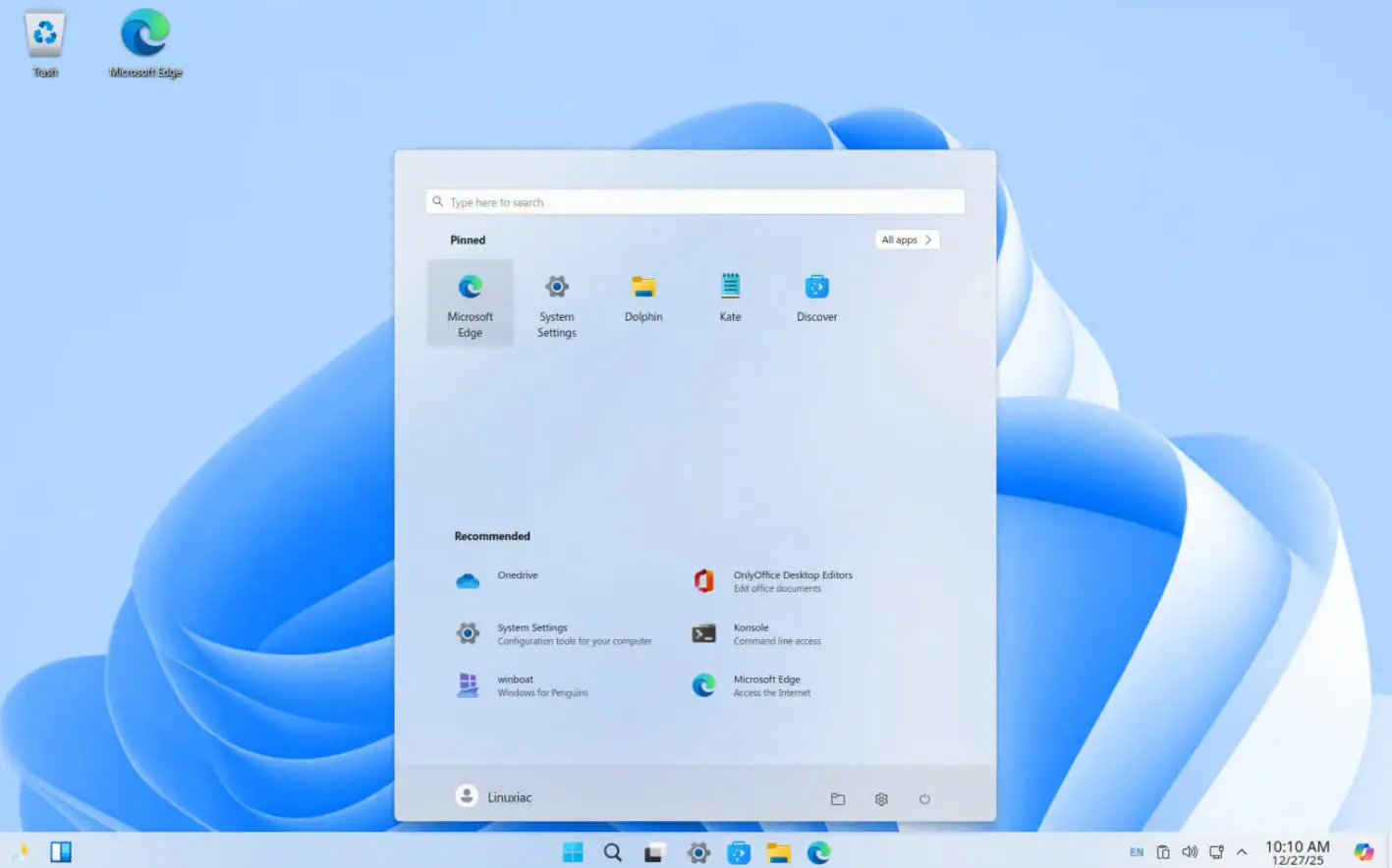
What you're looking at is Winux Linux . More specifically, it's the KDE Plasma 5 desktop environment (version 5.27), heavily customized with themes, extensions, styles, and icons to mimic Windows 11.
However, some things are a bit excessive, for example, the loading screen that appears before logging in, which uses the Windows logo. Not to mention how acceptable this might be from a legal perspective.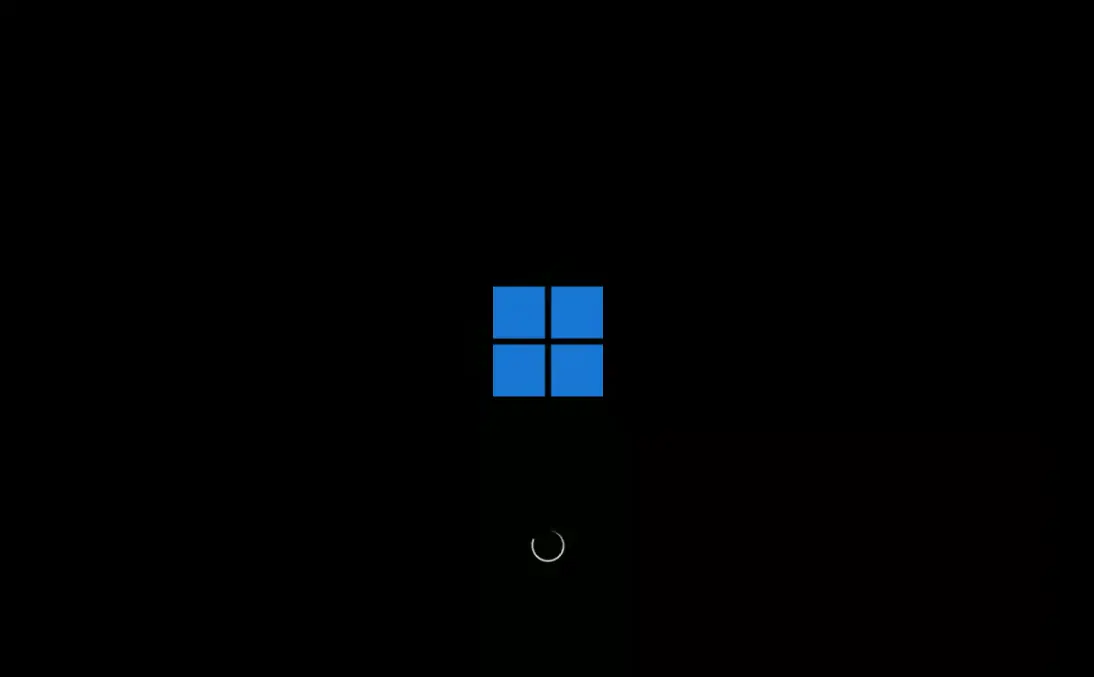
But before we go any further, it’s worth saying a little more about the distribution itself. As we said, Winux is a Linux distribution that aims to replicate the Microsoft Windows user experience as closely as possible. Its main goal is to make Linux feel familiar to Windows users, closely matching the visual design, layout, and everyday workflows of Windows, while still running on a Linux system.
However, rather than introducing new concepts, Winux focuses on emulation, trying to position itself as a friendly environment for users who are familiar with Windows and want minimal changes when switching to Linux. The current stable release, winux-11.26.01 , is based on Ubuntu 24.04.3 LTS “Noble Numbat” and runs the Linux 6.14 kernel.
Internally, Winux relies on WinBoat to install and launch Windows applications. If you haven't heard of it, it's a relatively new Linux tool that runs a full Windows environment inside a container (using Docker and KVM) and displays Windows applications as native on the Linux desktop over RDP.
Winux was formerly known as Wubuntu and LinuxFX.
It is a fact that the issue of imitation is - to put it mildly - annoying.
More annoying, however, is the -essentially- bullying of Ms. that after its "decision", hundreds of millions of PCs will "have to" go to the trash, according to the company, FORCING the inhabitants of the planet to purchase a new and now EXTREMELY EXPENSIVE (due to prices for RAM, SSD, etc.) new system.
How did Ms set up its imposition?
Simple. Essentially promoting the security provided by a system that has fTPM, "forgetting" to tell the masses that motherboards have had a TPM slot since 2011. A slot that was missing a €10 chip.
What was Ms based on to forcefully change systems?
Simpler. In the HABIT of the masses! because its PRs know perfectly well the "Exis seconda nature" as the great philosopher Aristotle said.
To the habit that the ignorant have around computers. To the ignorant who, while using their computer for YouTube, emails, banking, reading news, DOES NOT KNOW that they do THESE things FASTER and with LIGHTER INFRASTRUCTURE on a computer running Linux.
So, MAYBE an imitation at the first stage, will "intimidate" such a computer owner a little, who will secretly think: oh, I know that.
Regarding the spread of Linux, the problem starts PRIMARILY with Torvald. Its creator, who I suspect encourages the multitude of Linux versions (ed. that's not a bad thing), but also encourages PROJECTILE that sow opinions of the form: if you don't know how the terminal works, don't bother with Linux.
Or the others who say: my Arch is better than your Zorin or Mint.
These and certain other "details" make people fearful and resentful of the "foreign" operating system Linux, according to them.
Finally, regarding "imitation", I will remind you of some details, probably unknown to the vast majority of computer users.
A) Wasn't it an imitation of Lotus, Gates' Ms Excel?
B) Wasn't Gates's word Ms an imitation of the word perfect?
C) or maybe we don't know in what "way" ... he acquired the rights - royalties of Lotus and Perfect from their creators? (call me: with a gun to my head, everyone signs...)
D) weren't Windows 2000 and the Server editions an imitation of the Unix kernel?
I close by using and misinterpreting the Theological: Let the children alone and do not hinder them from coming to me, (the Linux of computers, the signatory of this comment adds).
Happy New Year and health to everyone.