


Viivo: H better safety for cloud storage, it's definitely something we're all concerned about. The services Clouds offer a way to synchronize data between devices, as well as to easily access it at any time from the Internet.
One of the main ones issues with cloud storage is that you don't know who controls your data. Companies like Google, Dropbox, Amazon and Microsoft they promise your data is safe, but most seem to scan your files for various reasons.
Microsoft, for example, in the Onedrive service, automatically scans your files for naked photos that are sent to a personal folder in the user's account.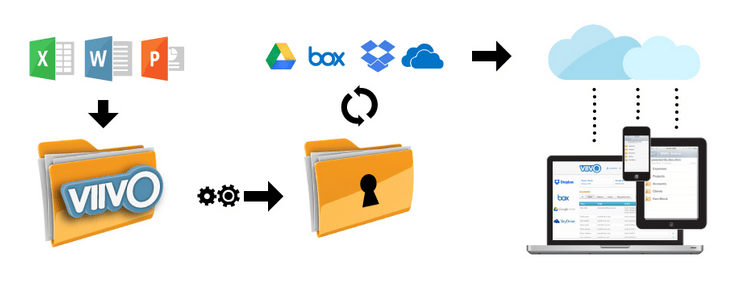
So it looks like encryption is necessary before uploading your Cloud files. One of the automatic encryption services is Viivo.
Viivo comes in three versions: free pro and enterprise. The free version supports most features, with the exception of auditing identity two-factor, extended support and access to the management console.
An account is required for the company, which can also be done during the installation. Note that you will need to verify your email address to complete the process.
You will also need to set a password during installation, which will also be used to encrypt files. So the password you set should be secure.
Each user of the Viivo service has a Private Key encrypted with AES-256. The private key comes out of the password using PBKDF2 HMAC SHA256
For shared folders, there is the Share Key that is encrypted with RSA 2048
All of your files are encrypted with AES-256
Viva supports encryption in almost all popular Dropbox, Onedrive, Box and Google Drive services.